
Leveraging Downtime and Funding to Optimize Compressed Air Systems
March 17, 2026
In the steel blanking industry, wherein flat, geometric shapes are created by feeding a coil of sheet metal into a press and die, compressed air is often referred to as the fourth utility because of its essential role in operations. Compressed air systems power the blanking and stamping processes, provides precision cutting and quality control operations, and supports automation & handling. Compressed air also provides cleaner, faster operation than hydraulic equipment.
Recently, Energy Sciences was hired by Delaco Steel as a consultant for a compressed air system optimization project to align with the goals of the Michigan Department of Environment, Great Lakes, and Energy (EGLE) Small Manufacturers Re-Tooling Grant[1] Program. Energy Sciences’ scope included assisting Delaco Steel with the application process, project progress reporting, system optimization, project cost and energy-savings calculations, development of the final report, and project close-out for the grant. The project also involved collaborating with DTE to ensure Delaco Steel received rebates for fixing the compressed air leaks.
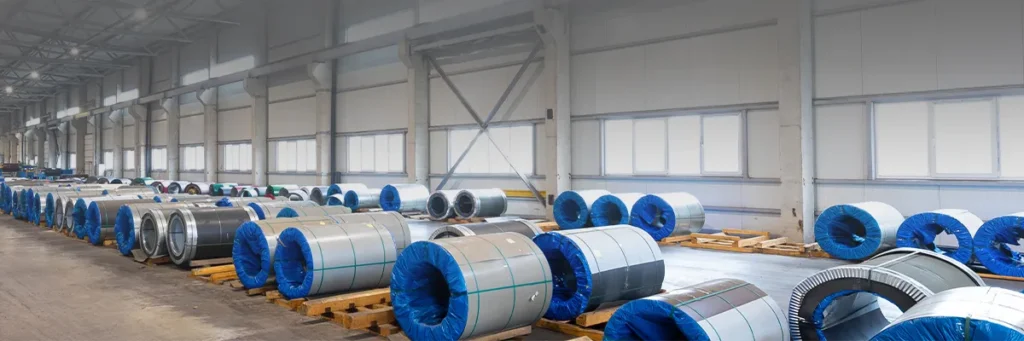
The Delaco Steel aluminum and steel blanking plant in Dearborn, Michigan, covers approximately 500,000 square feet with plant operations running 24/7 across three shifts. With main processes including precision and scallop blanking, laser welding, slitting, washing, oiling, and milling for aluminum and steel blanks – optimal performance of compressed air systems is critical to their success.
A new press was scheduled for installation and upgrades to the compressed air system were necessary to accommodate the increased demands of this expansion. Planned upgrades included adding an extra air compressor and enlarging the main header’s pipe size. A system shutdown was required to install these upgrades, which offered an opportunity for Energy Sciences to implement additional energy-saving measures without adding any production downtime.
As a result of a compressed air leak study that was part of this assessment, significant energy and cost savings were achieved by repairing 30 identified and tagged air leaks throughout the facility, totaling approximately 279.59 CFM. Fixing all 30 leaks resulted in an 11.3% reduction in flow—based on the system’s total capacity of 2,464 CFM. The energy savings from these repairs amount to about 2.4% of the facility’s annual energy use, equivalent to an estimated 463,078 kWh/yr. Beyond the financial savings of these energy use reductions, the implemented upgrades and improvements equated to an annual emissions reduction of 203.2 metric tons of carbon dioxide. Increased efficiencies in compressed air systems also have day-to-day benefits such as improved system stability, extended compressor life, and reduced maintenance costs.
Alongside the savings from repaired air leaks, additional energy savings were achieved by optimizing the compressed air system sequencing. Inefficient compressor sequencing was corrected by implementing a method called cascade control – also known as pressure band control. Cascade control is the most common method of sequencing when there are no network or automated controls for the compressed air system and involves turning the air compressors on and off according to staggered pressure bands. An example of cascade control is shown in Figure 1 below.

Figure 1: Example of a Cascading Compressor Control Sequencing Method
The Delaco Steel compressed air system is made up of four air compressors (AC4, AC5, AC6, AC8), where AC6 is a back-up compressor which only operates when one of the other three compressors are down for maintenance or repairs. AC4 and AC5 have been sequenced to operate in relation to the baseload of the compressed air system, meaning that their corresponding pressure setpoint ranges would correlate to pressures bands A, B, or C in the example provided in Figure 1. Additionally, AC8 has been sequenced to operate as the trim compressor, accounting for any additional load beyond the system’s base load. The AC8 pressure setpoint range correlates to pressure band D in the example provided in Figure 1. This will ensure that AC8 is the first compressor in the system to unload or turn off when the compressed air system’s base load is met. Since AC8 is of variable speed drive (VSD) control, it is ideal for this compressor to primarily operate at partial load, i.e., its most efficient operating mode.
Based on post-implementation data from the compressor sequencing, the compressed air production increased by 14% due to higher system capacity from larger pipe sizes in the system header and the addition of new press equipment. Conversely, the kW/CFM ratio of the compressed air system decreased by 12%, indicating a more efficient operation. As a result of the compressed air system sequencing adjustment, increased system operating efficiency is estimated to yield 323,913 kWh/yr and $35,630/yr in annual savings.
By leveraging the expertise of the Energy Sciences team and collaborating in their planned production expansion, Delaco Steel was able to simultaneously boost production levels and achieve significant energy savings by optimizing their compressed air system.
Written by Energy Sciences Customer Engagement Manager, Diana Nash
Co-written and Reviewed by Energy Sciences Engineer, Zach Kosmal
[1] The project costs were covered by utilizing both the EGLE Small Manufacturers Retooling Grant and utility incentives.
Related Posts

Industrial Decarbonization
At the 2026 MI Healthy Climate Conference, industrial decarbonization was highlighted as one of the key components in Michigan’s carbon reduction strategy. Reducing the emissions coming out of industrial...
Powering Smarter: How One Hidden Technology Is Cutting Industrial Energy Bills –...
The Problem Nobody Talks About at the Meter Every month, factories, hospitals, data centers, and large commercial buildings pay more for electricity than their actual energy consumption should require. The...

ES Leak Surveys: Low Commitment, High Savings
Compressed air systems are often one of the most expensive utilities in a facility, and leaks can account for a significant amount of wasted energy. A compressed air leak...
ASHRAE Audits: A Practical Guide to Smarter Energy Decisions
As energy costs rise, building systems become more complex, and efficiency standards continue to evolve, organizations are looking for clear, more reliable ways to understand how their facilities are...

Illuminating Energy Savings
The complex landscape of energy efficiency is constantly developing according to research, experience, and best practices that are shared industry wide. As such, there are a number of moving...

Solar Inspections for Safe and Optimal Operation
Solar inspections play an important role in ensuring systems are installed correctly, operate safely, and continue to perform optimally over time. As solar projects continue to expand across the...